
AI Generated Results
Uploaded Image
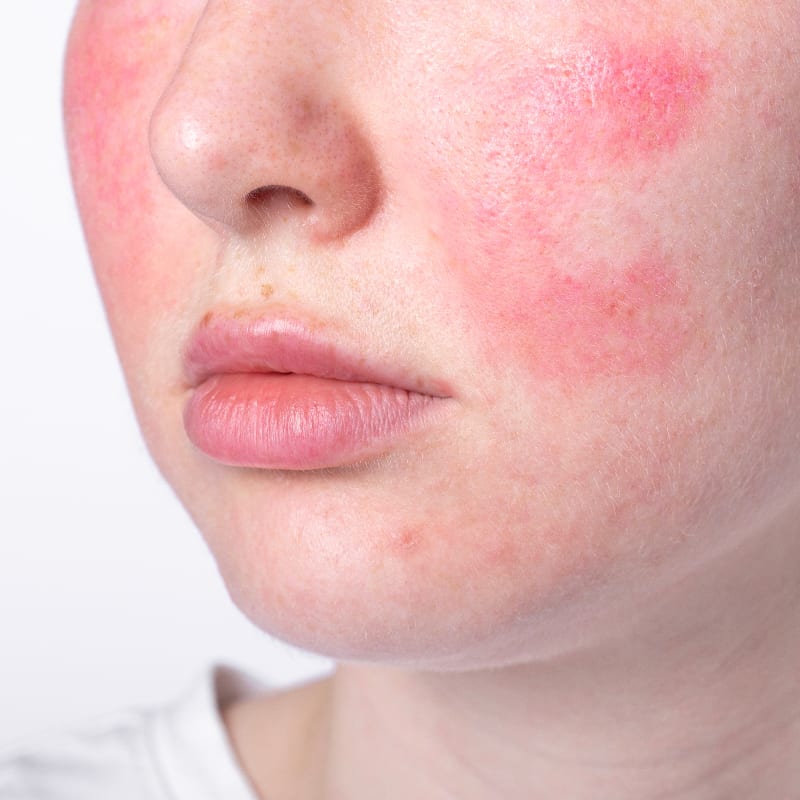
The image shows facial redness prominently over the cheeks and nose area, with a butterfly-shaped distribution. Based on this presentation, here are the most likely diagnoses:
Possible Diagnoses and Likelihoods:
-
Rosacea – 60%
-
Chronic redness, flushing, visible capillaries, sometimes acne-like bumps.
-
Triggered by heat, spicy foods, alcohol, sun exposure, or stress.
-
-
Systemic Lupus Erythematosus (SLE) – 25%
-
Characteristic “malar rash” (butterfly-shaped) over the nose and cheeks.
-
Often associated with fatigue, joint pain, and other systemic symptoms.
-
-
Seborrheic Dermatitis – 10%
-
Red, flaky patches, often near the nose, eyebrows, or scalp.
-
May have greasy appearance and mild itch.
-
-
Contact Dermatitis / Allergic Reaction – 5%
-
Redness due to reaction to skin care products, cosmetics, or irritants.
-
Often itchy or burning sensation.
-
Suggested Remedies:
✅ If Rosacea:
-
Topical Treatments:
-
Metronidazole gel/cream (0.75% or 1%)
-
Azelaic acid 15–20%
-
Ivermectin 1% cream (especially for bumps)
-
-
Lifestyle Modifications:
-
Identify and avoid triggers (spicy food, alcohol, heat, sun).
-
Use gentle, fragrance-free cleansers and moisturizers.
-
Always apply broad-spectrum sunscreen (SPF 30+) daily.
-
-
Oral antibiotics:
-
Doxycycline (40–100 mg daily) for moderate to severe cases.
-
✅ If Lupus (SLE):
-
Requires medical evaluation and blood tests (ANA, anti-dsDNA, etc.).
-
Treatment may include:
-
Topical steroids for skin rash.
-
Hydroxychloroquine (Plaquenil) systemically.
-
Sun protection is critical — use broad-spectrum SPF 50+ sunscreen daily.
-
✅ If Seborrheic Dermatitis:
-
Ketoconazole 2% cream or selenium sulfide face wash.
-
Mild topical steroids like hydrocortisone 1% for flares (short term).
-
Gentle skin care to reduce irritation.