
AI Generated Results
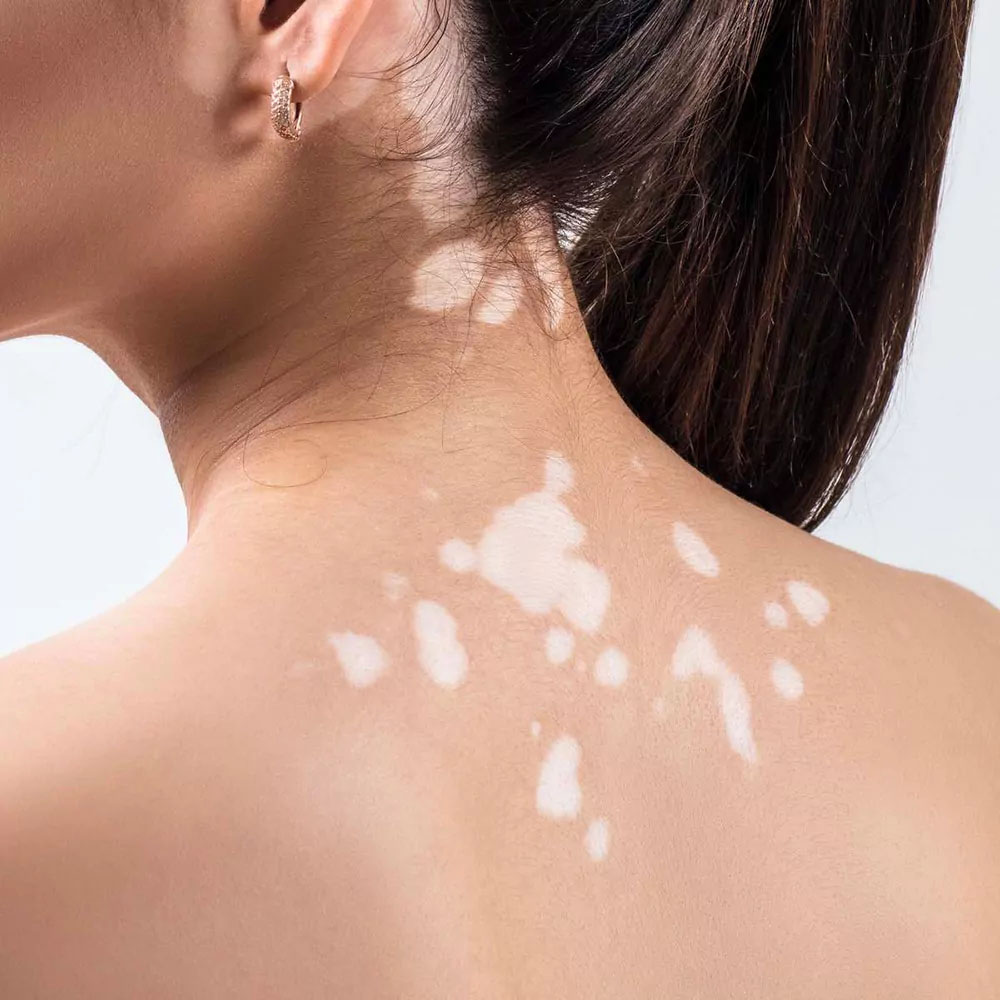
Uploaded Image
The image shows well-defined white patches (depigmented macules) primarily on the upper back and neck area. These patches are characteristic of a condition affecting melanin production in the skin.
🔍 Possible Diagnoses and Likelihoods
-
Vitiligo – 90%
-
Autoimmune condition causing the destruction of melanocytes (pigment-producing cells).
-
Commonly presents as milky-white patches with sharp borders.
-
Often symmetrical and may spread over time.
-
Can be associated with other autoimmune disorders.
-
-
Pityriasis Versicolor (Tinea Versicolor) – 5%
-
Caused by a yeast (Malassezia species).
-
Patches may appear lighter or darker, sometimes with slight scaling.
-
Usually itchy and more common in humid climates.
-
-
Post-inflammatory Hypopigmentation – 3%
-
Follows skin injury, inflammation, or conditions like eczema or acne.
-
Patches are often less sharply defined.
-
-
Chemical Leukoderma – 2%
-
Caused by exposure to certain chemicals (e.g., phenols, rubber compounds).
-
Often occupational, localized to areas of contact.
-
✅ Suggested Remedy for Vitiligo
1. Topical Treatments
-
Topical Corticosteroids (e.g., clobetasol) – First-line for localized vitiligo.
-
Topical Calcineurin Inhibitors (e.g., tacrolimus or pimecrolimus) – Safer for long-term use, especially on the face and neck.
-
Vitamin D analogs (e.g., calcipotriol) – Sometimes used in combination with corticosteroids.
2. Phototherapy
-
Narrowband UVB (NB-UVB) therapy – Gold standard for widespread or progressive vitiligo.
-
Excimer laser – For smaller areas.
3. Surgical Options (for stable vitiligo)
-
Melanocyte transplantation, skin grafting – Considered when other treatments fail and the condition is stable for over a year.
4. Cosmetic Options
-
Camouflage makeup – Immediate cover-up of patches.
-
Self-tanning products – Temporarily darken depigmented areas.
-
Micropigmentation (tattooing) – For lips and small areas.
5. Lifestyle & Support
-
Use sunscreen to prevent burns on depigmented skin.
-
Psychological support or counseling for body image and self-esteem.
-
Screening for associated autoimmune diseases (thyroid dysfunction is common).